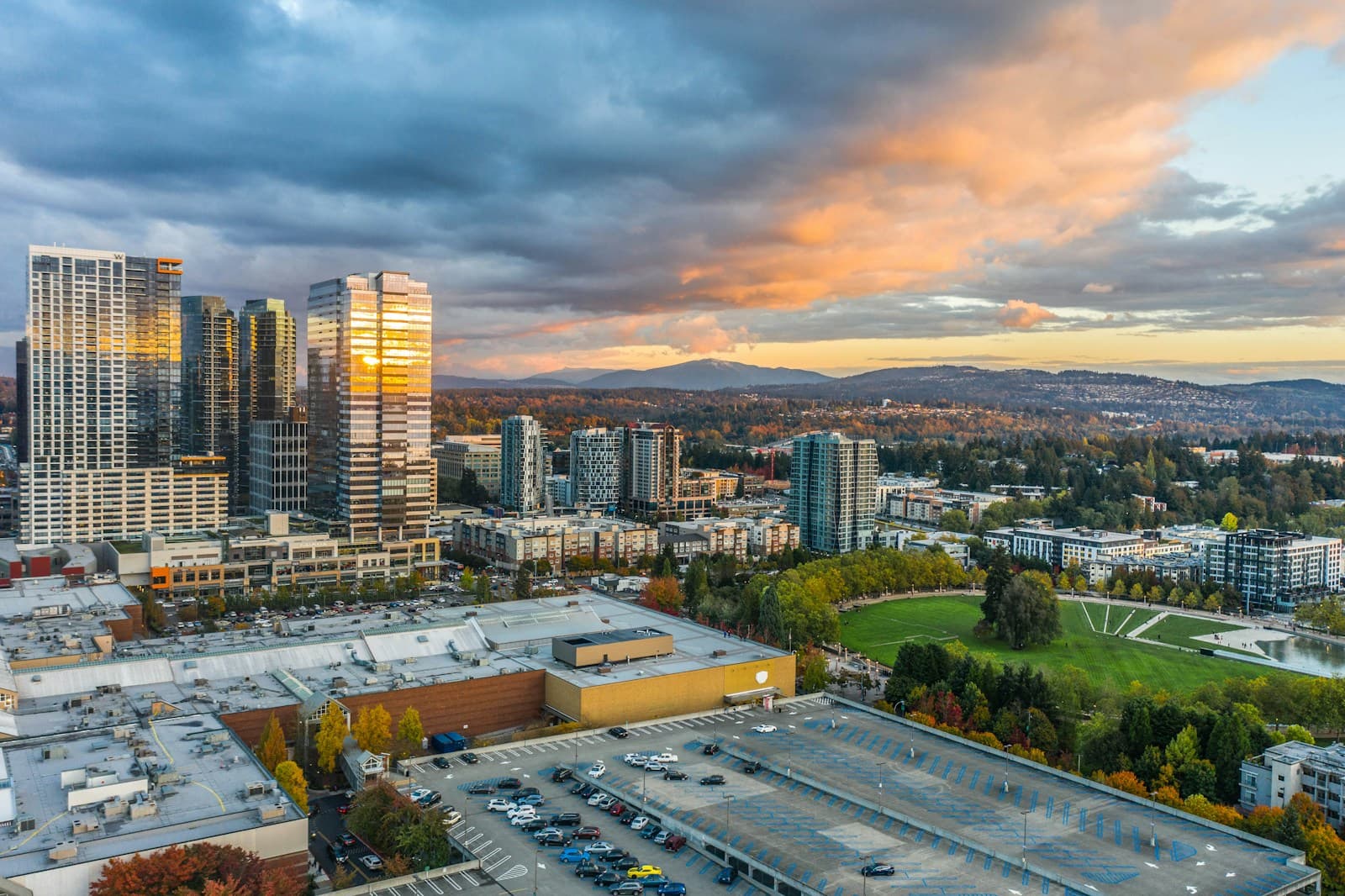
What Affects Rates in Bellevue
- Senior drivers in Bellevue who avoid peak I-405 southbound traffic (7–9 AM) and SR-520 westbound merges near Evergreen Point report fewer stress-related incidents and qualify more readily for telematics discounts. Carriers track braking patterns and lane changes on these corridors specifically; drivers who time medical appointments and errands for mid-morning or early afternoon windows see 8–12% lower telematics-adjusted rates. The managed express lanes on I-405 offer predictable flow for drivers willing to pay tolls, reducing the hard-braking events that increase collision premiums for the 70+ age bracket.
- Bellevue's three major hospital campuses—Overlake Medical Center on 116th Avenue NE, Virginia Mason Franciscan Health in Factoria, and the expanding Kaiser Permanente facility near Crossroads—sit within 15 minutes of most senior-dense neighborhoods. Insurers weight proximity to Level II trauma centers when pricing comprehensive and uninsured motorist coverage for drivers 70 and older; living within a 6-mile radius of Overlake or Virginia Mason can reduce comprehensive premiums by $40–$65 annually compared to more distant King County locations. This proximity becomes critical for seniors managing chronic conditions who drive themselves to regular appointments.
- Senior drivers in Bellevue average 6,200–7,800 miles annually, well below the state average of 10,500 miles, making low-mileage and pay-per-mile programs especially cost-effective here. Programs like Metromile, Nationwide SmartMiles, and Allstate Milewise deliver 18–28% savings for Bellevue seniors who stay under 8,000 miles yearly. Drivers in walkable neighborhoods near Bellevue Square, Crossroads, or Old Bellevue who use their vehicles primarily for medical appointments and occasional highway trips see the steepest discounts, with some paying under $95/mo for full coverage when mileage drops below 5,000 annually.
- Collision and comprehensive claims vary significantly between Bellevue's neighborhoods, directly affecting senior driver rates. Somerset, Enatai, and Clyde Hill show theft rates 60% below the Bellevue average, which lowers comprehensive premiums by $55–$85 annually for garaging addresses in those ZIP codes (98006, 98004). Conversely, seniors living near the Crossroads or Factoria commercial districts (98006, 98008) face higher comprehensive costs due to parking lot incidents and catalytic converter theft. Collision frequency on neighborhood arterials like Coal Creek Parkway and 156th Avenue NE remains low compared to urban Seattle, keeping liability and collision premiums 10–14% below King County metro averages for drivers 65+.
- Bellevue's hilly terrain in neighborhoods like Somerset, Lake Hills, and Newport presents black ice risk on steep residential streets during December–February freezes, but most senior drivers here reduce or eliminate driving during weather advisories rather than risk navigating icy slopes. Carriers recognize this behavioral pattern; seniors who opt into telematics monitoring and demonstrate reduced winter driving frequency qualify for seasonal adjustment discounts of 5–9%. The city's rapid response on arterials like Bellevue Way and 148th Avenue NE means main corridors clear quickly, but seniors who stick to flat, treated routes near the Wilburton or Phantom Lake areas avoid both collision risk and the telematics penalties that come from winter hard-braking incidents.
Compare rates from carriers that specialize in senior drivers
Mature driver discounts, low-mileage rates, and coverage reviews — see what you're actually eligible for.
Get Your Free QuoteCoverage Recommendations
Cost estimates are based on available industry data and vary by driver profile. These are not insurance quotes.
Liability Insurance
Bellevue's dense I-405/SR-520 interchange near downtown creates elevated multi-car collision exposure; seniors with 100/300/100 limits avoid out-of-pocket costs when liability exceeds state minimums in congested merge zones.
$65–$95/mo for 100/300/100Estimated range only. Not a quote.
Comprehensive Coverage
Comprehensive claims in Bellevue concentrate near Crossroads and Factoria commercial areas; seniors in Somerset, Enatai, or Clyde Hill pay $55–$85 less annually due to 60% lower theft rates in those residential ZIP codes.
$45–$75/mo with $500 deductibleEstimated range only. Not a quote.
Collision Coverage
Collision frequency on Bellevue's neighborhood arterials like Coal Creek Parkway and 156th Avenue NE runs 10–14% below King County metro averages, keeping collision premiums lower for senior drivers who avoid peak I-405 congestion.
$50–$85/mo with $500 deductibleEstimated range only. Not a quote.
Uninsured Motorist Coverage
Uninsured driver rates in King County run near 12%; seniors frequently traveling I-405 between Bellevue and Renton or Tukwila face higher exposure to uninsured motorists on those southern stretches, making 100/300 uninsured motorist limits essential.
$20–$35/mo for 100/300Estimated range only. Not a quote.
Medical Payments Coverage
With Overlake Medical Center, Virginia Mason, and Kaiser Permanente all within 15 minutes of most Bellevue neighborhoods, MedPay bridges the gap between accident and insurance settlement for seniors managing chronic conditions who need uninterrupted care.
$8–$18/mo for $5,000 limitEstimated range only. Not a quote.