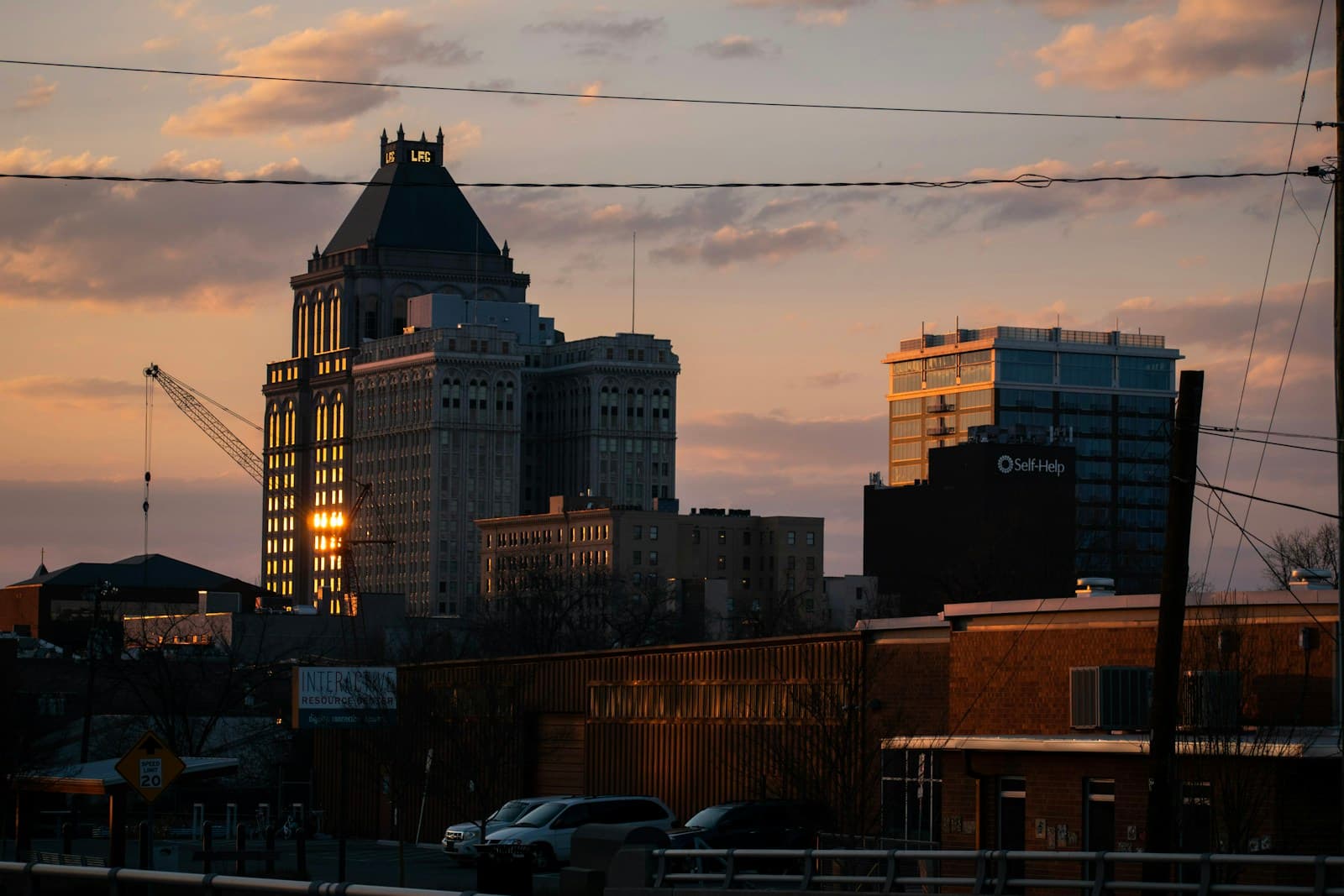
What Affects Rates in Greensboro
- Greensboro's downtown uses a straightforward grid between Elm, Market, and Greene Streets, with wide lanes and synchronized traffic lights that reduce stress for drivers managing vision changes or slower reaction times. Senior drivers who avoid I-40/I-85 interchange congestion near PTI Airport and stick to surface streets like Friendly Avenue and Battleground Avenue typically report fewer near-miss incidents, which keeps their records clean and premiums lower. The absence of complex multi-lane merges on most intra-city routes makes comprehensive coverage more affordable here than in Charlotte or Raleigh.
- Cone Health's Moses Cone Hospital sits at the north end of Wendover Avenue, and Wesley Long Hospital anchors the west side near Friendly Avenue, placing emergency care within 10 minutes of most Greensboro neighborhoods. This proximity matters for uninsured motorist coverage decisions—shorter transport times mean lower medical costs per claim, which insurers factor into UM rates. Seniors living near these facilities in neighborhoods like Starmount and Sunset Hills often see slightly lower comprehensive premiums because accident-related medical severity averages lower when care is minutes away.
- Senior drivers in Greensboro average 6,000–8,000 miles annually compared to the statewide average of 11,000–13,000, largely because grocery (Harris Teeter, Fresh Market), pharmacy (CVS, Walgreens clusters on Lawndale and Battleground), and medical appointments cluster within 3-mile circles of most residential areas. Carriers including State Farm, Nationwide, and Allstate offer usage-based or low-mileage programs that cut rates 15–25% for drivers logging under 7,500 miles per year. Telematics programs work particularly well for Greensboro seniors who drive predictably short distances at off-peak times.
- Greensboro receives 1–3 significant ice events per winter, typically January through early March, when temperatures drop suddenly and precipitation freezes on overpasses along I-40 and Wendover Avenue. Comprehensive coverage becomes relevant for seniors who park outside during these events—falling tree limbs and ice damage claims spike in neighborhoods with older tree canopies like Irving Park and Westerwood. Drivers who garage vehicles or limit winter driving often drop comprehensive to save $20–$40/month, accepting the risk of weather-related damage in exchange for lower fixed costs on limited income.
- Greensboro Transit Authority's bus routes serve downtown, Four Seasons, and Cone Hospital corridors, but frequencies run 30–60 minutes outside peak hours, making it impractical for most seniors with medical appointments or time-sensitive errands. The limited transit network means most drivers 65+ maintain full vehicle use rather than reducing coverage when scaling back driving—liability-only policies rarely make sense unless a senior has stopped driving entirely. Ride-share availability through Uber and Lyft remains inconsistent in outer neighborhoods like McLeansville and Pleasant Garden, reinforcing car dependency.
Compare rates from carriers that specialize in senior drivers
Mature driver discounts, low-mileage rates, and coverage reviews — see what you're actually eligible for.
Get Your Free QuoteCoverage Recommendations
Cost estimates are based on available industry data and vary by driver profile. These are not insurance quotes.
Liability Insurance
Greensboro's dense intersection network at Elm/Market downtown and Wendover/Lawndale increases rear-end and turning collision risk, making higher liability limits prudent for drivers on fixed income who cannot absorb a lawsuit.
$40–$75/moEstimated range only. Not a quote.
Comprehensive Coverage
Neighborhoods with mature tree cover like Westerwood and Starmount see higher comprehensive claims from ice-related limb damage January through March, making this coverage valuable for outdoor-parked vehicles.
$25–$50/moEstimated range only. Not a quote.
Uninsured Motorist Coverage
Greensboro's uninsured driver rate runs near the state average of 7–9%, but proximity to Moses Cone and Wesley Long hospitals reduces per-claim medical costs, keeping UM premiums lower than in rural counties with longer transport times.
$15–$35/moEstimated range only. Not a quote.
Full Coverage
Greensboro's mix of surface street driving and occasional I-40 trips for medical specialists or airport runs makes full coverage sensible for seniors still driving regularly, especially those logging 5,000+ miles annually.
$105–$165/moEstimated range only. Not a quote.